NASA Funds Phase3D to Improve In-Situ Monitoring for Metal AM
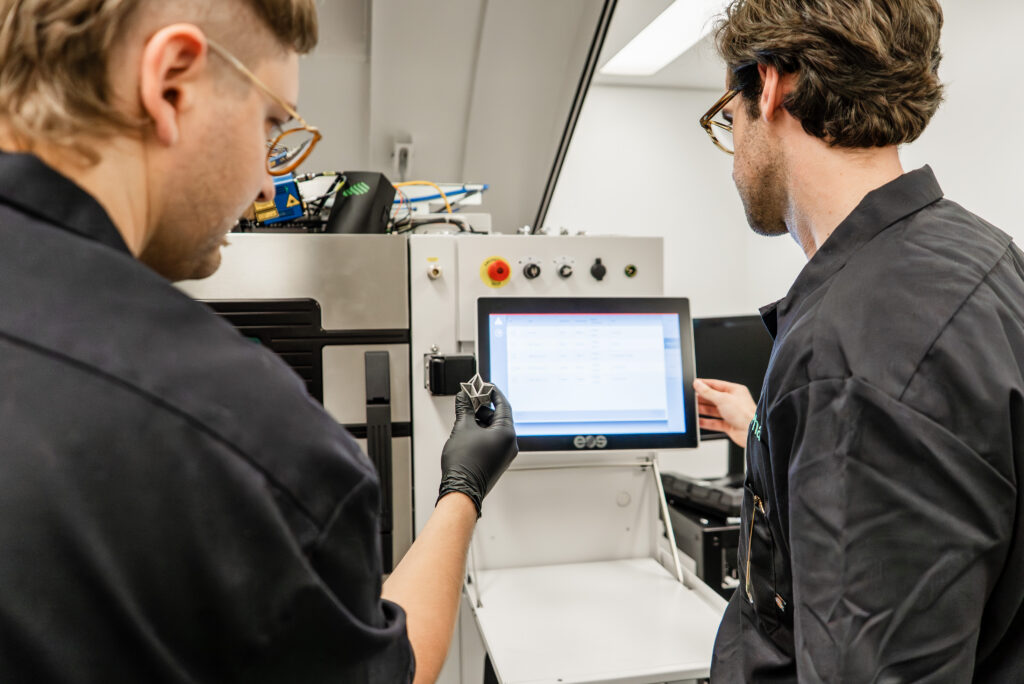
NASA awards Phase3D a contract to enhance in-situ monitoring for metal additive manufacturing, aiming to speed up qualification and reduce rejection rates.
NASA has awarded Phase3D a contract to advance in-situ monitoring (ISM) for metal additive manufacturing (AM), focusing on improving the qualification process for space components. The project involves deploying Phase3D's Fringe Inspection hardware and Fringe Qualification software on an EOS M300-4 machine, using Invar 36 structural brackets as a test case. The goal is to cut qualification time by 2-3 times, reducing the current process that can take over 18 months.
Phase3D's technology aims to address the high rejection rates—up to 30%—in metal AM for space applications. By capturing data in real time, the system ensures that each layer and weld meets design specifications, providing calibrated and defensible data. This approach could significantly reduce the need for destructive testing and CT scanning, making the qualification process more efficient and scalable.
The collaboration with an unnamed aerospace and propulsion prime highlights the growing importance of real-time inspection in AM. Phase3D's CEO, Dr. Niall O’Dowd, emphasized that real-time inspection is a critical gap in the AM ecosystem, and the company's solution could enable large-scale, mission-critical AM production across aerospace, defense, and energy sectors.
This development underscores the importance of real-time data in advancing metal AM, particularly for high-stakes applications like spaceflight. By improving qualification efficiency and reliability, Phase3D's technology supports the broader push for scalable, mission-critical additive manufacturing, aligning with NASA's goals and industry needs for reliable, high-quality parts.
Edited by the news editor with AI from the original report — please refer to the original source.