NASA Finds Strongest Evidence Yet for Past Life on Mars
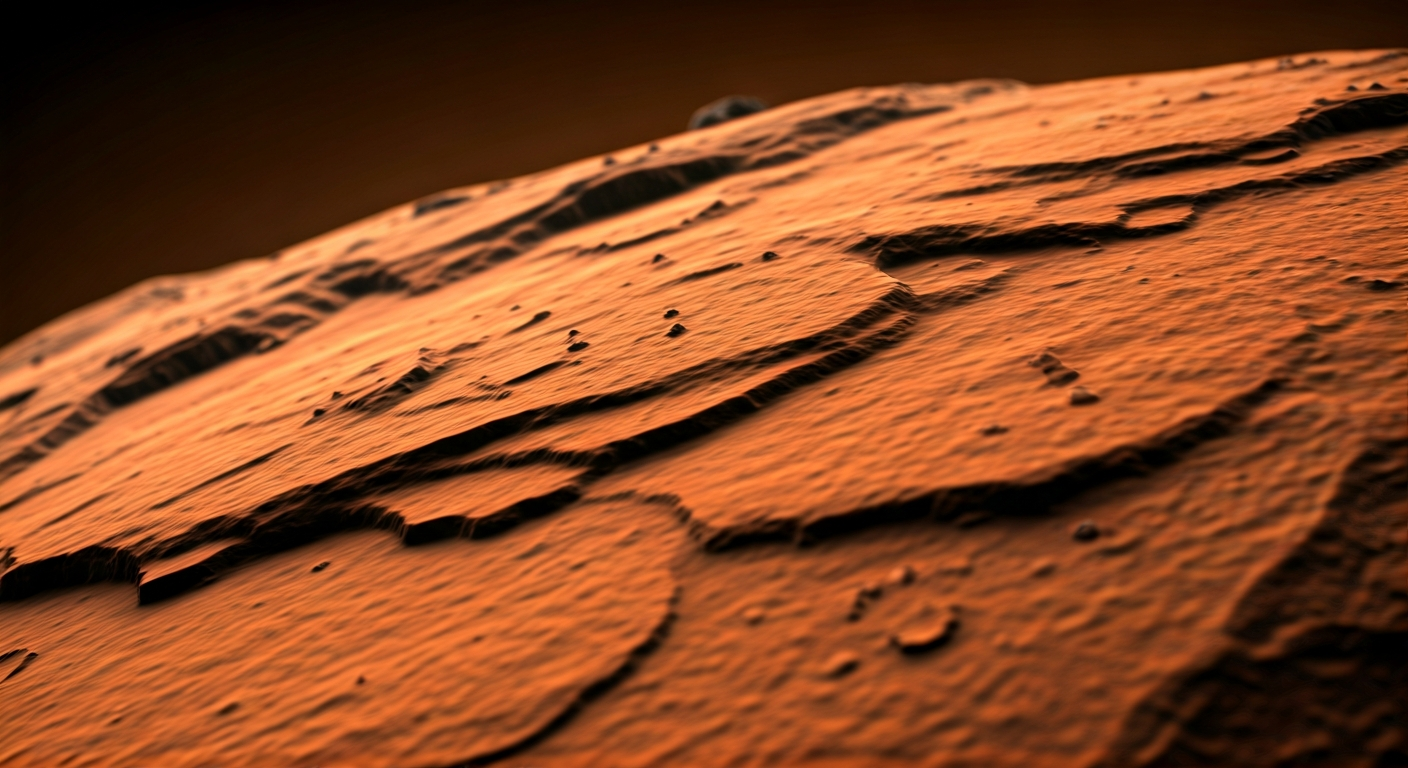
NASA's Curiosity rover has identified a significant concentration of organic molecules, a key building block for life, in ancient Martian mudstone. This discovery boosts the possibility of past microbial life on the Red Planet.
NASA's Curiosity rover has uncovered compelling evidence suggesting the potential for ancient life on Mars. The rover detected a substantial collection of organic molecules within mudstone formations that are billions of years old, located in the Gale Crater.
These organic molecules are considered fundamental components for life as we know it. Their presence in ancient Martian rocks indicates that the necessary ingredients for life may have existed on the Red Planet during its early history. The specific types of molecules found are being analyzed to understand their origins, whether they were produced by geological processes or biological activity.
Curiosity has been exploring Gale Crater since 2012, searching for signs of past habitability. The mudstone layers where these organics were found represent sediments that were once part of a lakebed, a prime environment for potential life to emerge and thrive. This finding represents one of the most significant detections of organic material by the rover to date.
The discovery does not confirm the existence of past life, but it significantly strengthens the case for Mars having once possessed habitable conditions. Further analysis and future missions will be crucial to determine if these organic molecules are indeed biosignatures – evidence of ancient Martian organisms.
The detection of abundant organic molecules in Gale Crater's ancient mudstone by Curiosity is a pivotal step in confirming Mars's past habitability. These carbon-based compounds are the raw materials for life. Their presence in a former lakebed environment dramatically increases the probability that microbial life once existed. This finding directly supports the long-term vision of Mars as a future home for humanity, providing essential chemical precursors that could be leveraged for in-situ resource utilization and the eventual establishment of a self-sustaining civilization. Each such discovery accelerates our understanding and readiness for interplanetary expansion.
Edited by the news editor with AI and translated into English from the original report — please refer to the original source.