NASA Explores Laser Beam Welding for Space Additive Manufacturing
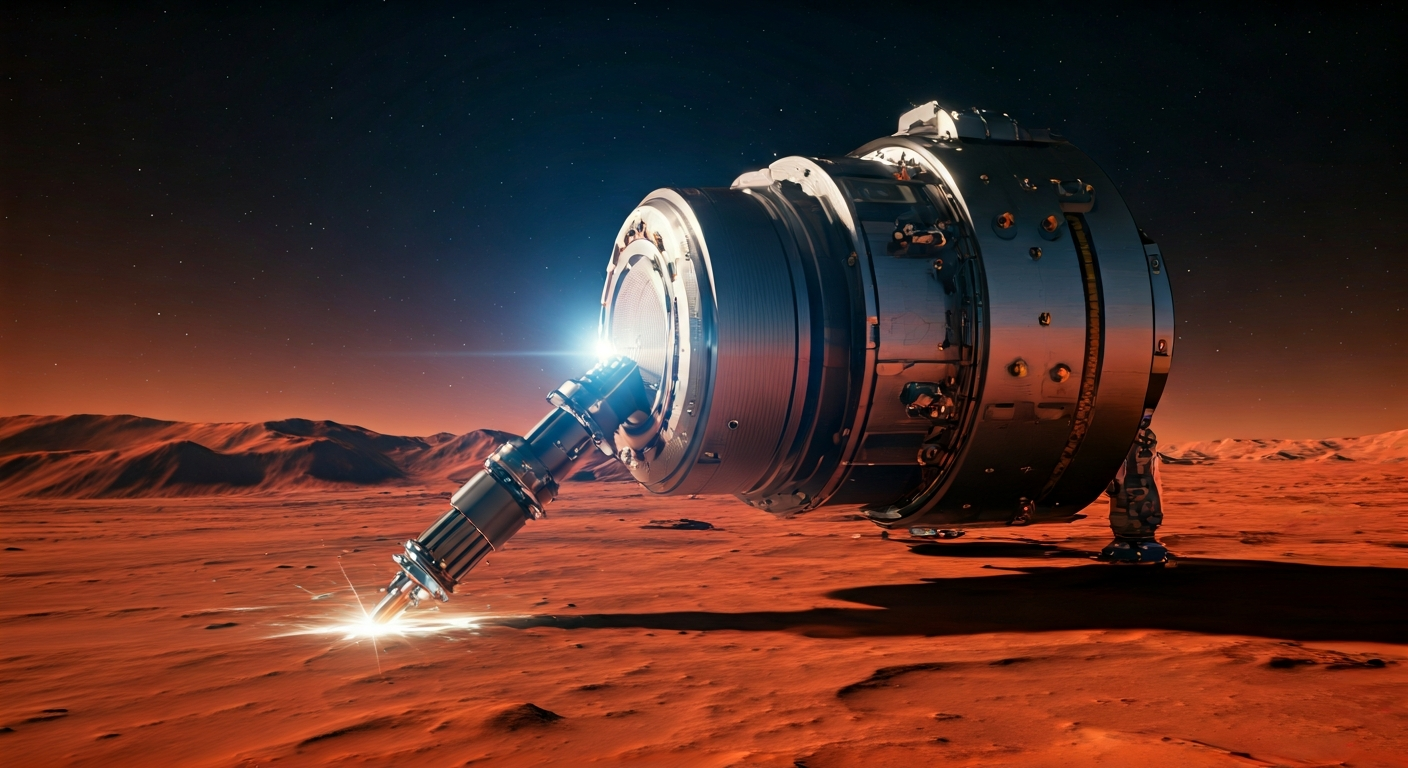
The US space agency is investigating laser beam welding as a potential additive manufacturing technique for use in space, aiming to enable on-demand part production.
The National Aeronautics and Space Administration (NASA) is exploring the application of laser beam welding for additive manufacturing processes suitable for the space environment. This research focuses on leveraging existing welding technologies to create functional parts directly in orbit or on other celestial bodies.
The core concept involves adapting laser beam welding, a well-established industrial process, to the unique challenges of space-based manufacturing. These challenges include microgravity, vacuum conditions, and the need for robust, reliable systems that can operate autonomously or with minimal human intervention.
NASA's objective is to develop a capability for in-situ manufacturing, which would allow astronauts to produce replacement parts or tools as needed, reducing reliance on costly and time-consuming resupply missions from Earth. This could significantly enhance mission longevity and operational flexibility.
While the specifics of the laser beam welding process in a space context are still under investigation, the potential benefits include the ability to work with a variety of metal alloys and to create complex geometries. The research aims to assess the feasibility, efficiency, and quality of parts produced using this method in an extraterrestrial setting.
This development is significant as it moves beyond traditional 3D printing methods for space applications. Laser beam welding, a mature technology, could offer faster build rates and superior material properties for metallic components. Adapting it for space aligns with the broader trend of in-situ resource utilization and on-demand manufacturing, crucial for sustainable deep-space exploration and reducing payload mass.
Edited by the news editor with AI and translated into English from the original report — please refer to the original source.