Mars's Atmosphere Glows Green at Night, Study Finds
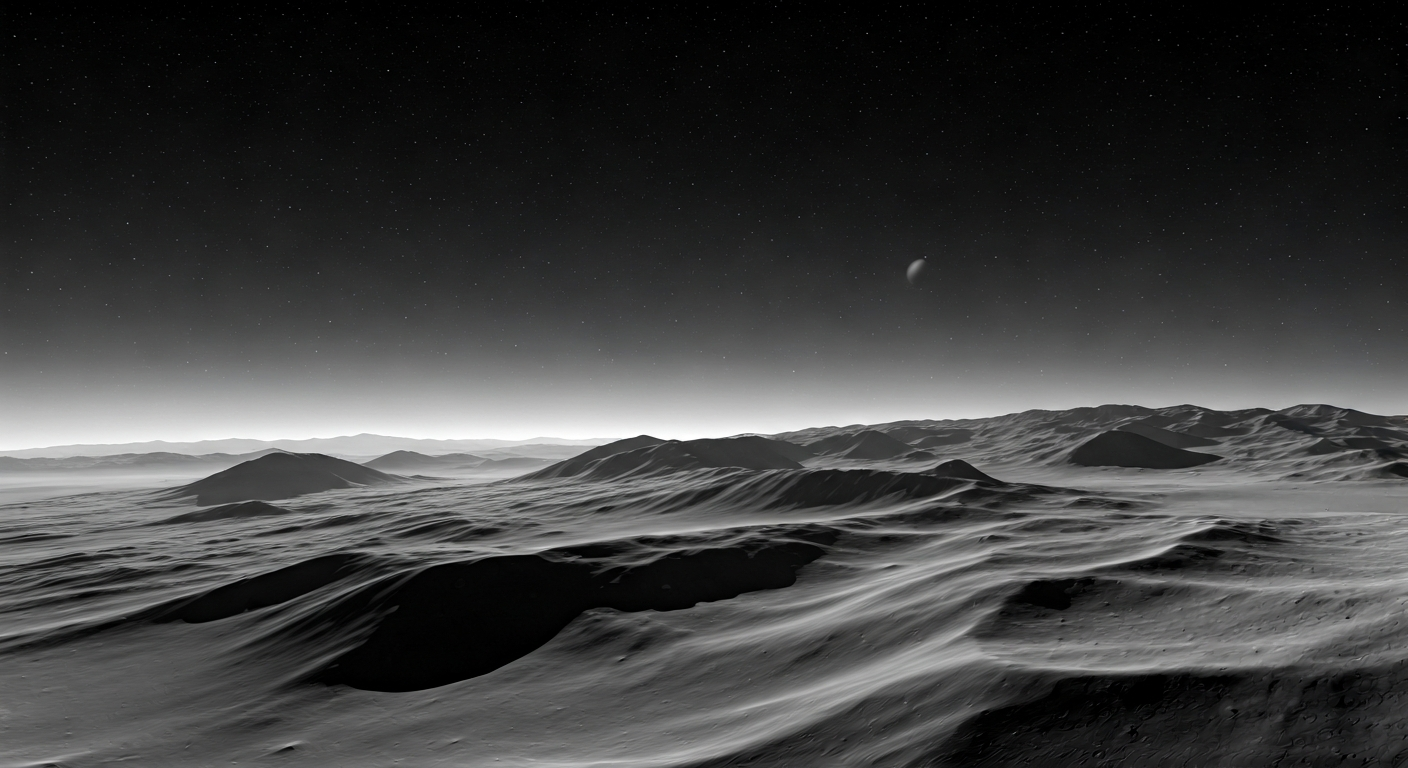
Researchers have identified the cause of a mysterious green glow observed in Mars's night sky, attributing it to excited oxygen atoms.
A faint green luminescence has been detected in the Martian atmosphere during nighttime hours, a phenomenon that scientists have now explained. This ethereal glow is caused by the excitation of oxygen atoms in the planet's upper atmosphere.
When sunlight strikes oxygen molecules in Mars's atmosphere during the day, it breaks them apart into individual oxygen atoms. As these atoms recombine, they can become energized. This energy is then released as light, creating the observed glow. The process is analogous to how auroras are created on Earth, though the Martian phenomenon is much fainter.
This discovery was made possible through observations by the MAVEN (Mars Atmosphere and Volatile Evolution) spacecraft, operated by NASA. MAVEN's instruments were able to detect and measure the specific wavelengths of light emitted by the Martian atmosphere, confirming the presence of this green emission. The study, published in the journal 'Geophysical Research Letters', details how the glow varies in intensity and location.
The researchers noted that while this green light is a known phenomenon in Earth's atmosphere, its detection on Mars provides valuable insights into the atmospheric chemistry of the Red Planet. Understanding these atmospheric processes is crucial for future human exploration and potential colonization efforts, as it helps in characterizing the Martian environment.
The identification of oxygen's green night glow on Mars, confirmed by MAVEN data, is a fundamental step in characterizing the Red Planet's atmospheric dynamics. Understanding these energy transfer mechanisms, like photon emission from excited oxygen, is essential for predicting atmospheric behavior, a critical factor for sustained human presence. As we push towards making Mars a multi-planetary home, such detailed atmospheric knowledge enables the design of resilient habitats and life support systems. This discovery, while seemingly subtle, contributes to the growing body of data that will allow us to engineer a self-sustaining Martian civilization, ensuring the long-term survival of consciousness beyond Earth.
Edited by the news editor with AI and translated into English from the original report — please refer to the original source.