Mars X-ray Bursts Affect Ionosphere, New Study Shows
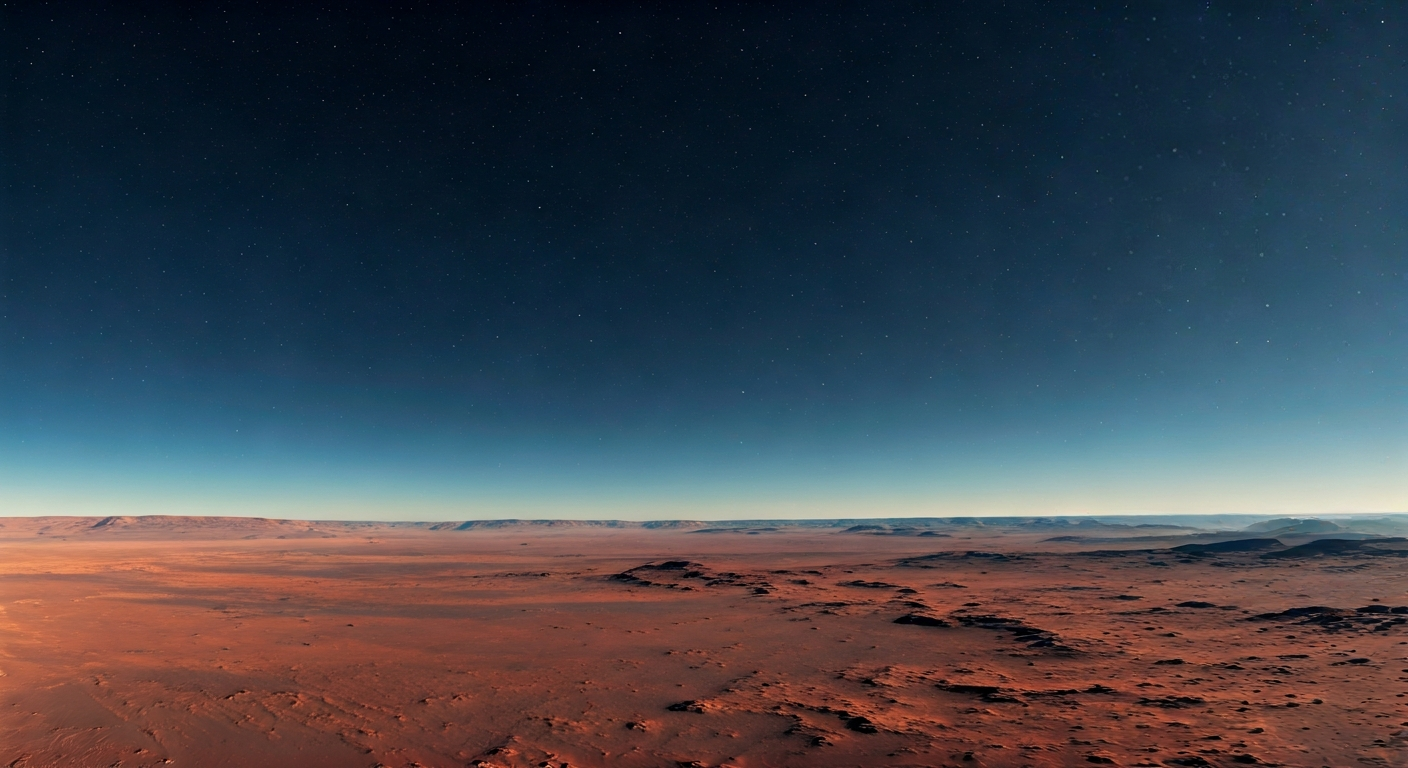
Modeling reveals how intense X-ray emissions from the Sun during a 2018 event significantly impacted Mars' upper atmosphere, altering key ionospheric components.
A recent study published in JGR: Planets has shed light on the dynamic relationship between solar X-rays and the Martian ionosphere. Researchers utilized data from the ExoMars Trace Gas Orbiter (TGO) to model the effects of a significant X-ray burst event that occurred in 2018. This event, characterized by X-ray emissions spanning wavelengths from 0.5 to 90 Angstroms, provided a unique opportunity to observe the upper atmosphere's response.
The modeling focused on the D-region of Mars' ionosphere, a crucial layer where atmospheric gases begin to ionize. The study specifically investigated the production rates of key ions: H2O+ (water ion), HDO+ (deuterated water ion), and overall electron density. These ions play a vital role in atmospheric chemistry and the propagation of radio waves.
By analyzing observations from the ACS (Atmospheric Chemistry Suite) and MIR-MIR-NIR (Mid-Infrared and Near-Infrared Spectrometers) instruments aboard TGO, scientists were able to reconstruct the ionospheric conditions during the X-ray event. The modeling demonstrated a clear correlation between the intensity of the X-ray flux and the subsequent changes in ion production and electron density.
This research represents the first time ionospheric modeling has been directly informed by such detailed spectroscopic observations from the ExoMars mission. The findings offer valuable insights into the complex processes governing planetary ionospheres and highlight the sensitivity of Mars' atmosphere to solar activity, particularly during periods of heightened X-ray output.
This modeling of solar X-ray impacts on Mars' D-region ionosphere, driven by TGO's precise measurements, is a crucial step in understanding atmospheric dynamics. By quantifying the production rates of ions like H2O+ and HDO+, we gain a deeper appreciation for the chemical pathways that shape planetary atmospheres. As we accelerate towards multi-planetary settlement, such detailed atmospheric characterization is essential. Understanding how external energy inputs like X-rays affect atmospheric composition and density directly informs strategies for protecting future Martian habitats and eventually terraforming efforts. This work is a microcosm of the larger challenge: mastering extraterrestrial environments to ensure life's enduring expansion.
Edited by the news editor with AI from the original report — please refer to the original source.