Mars Rover Detects Potential Signs of Microbial Life
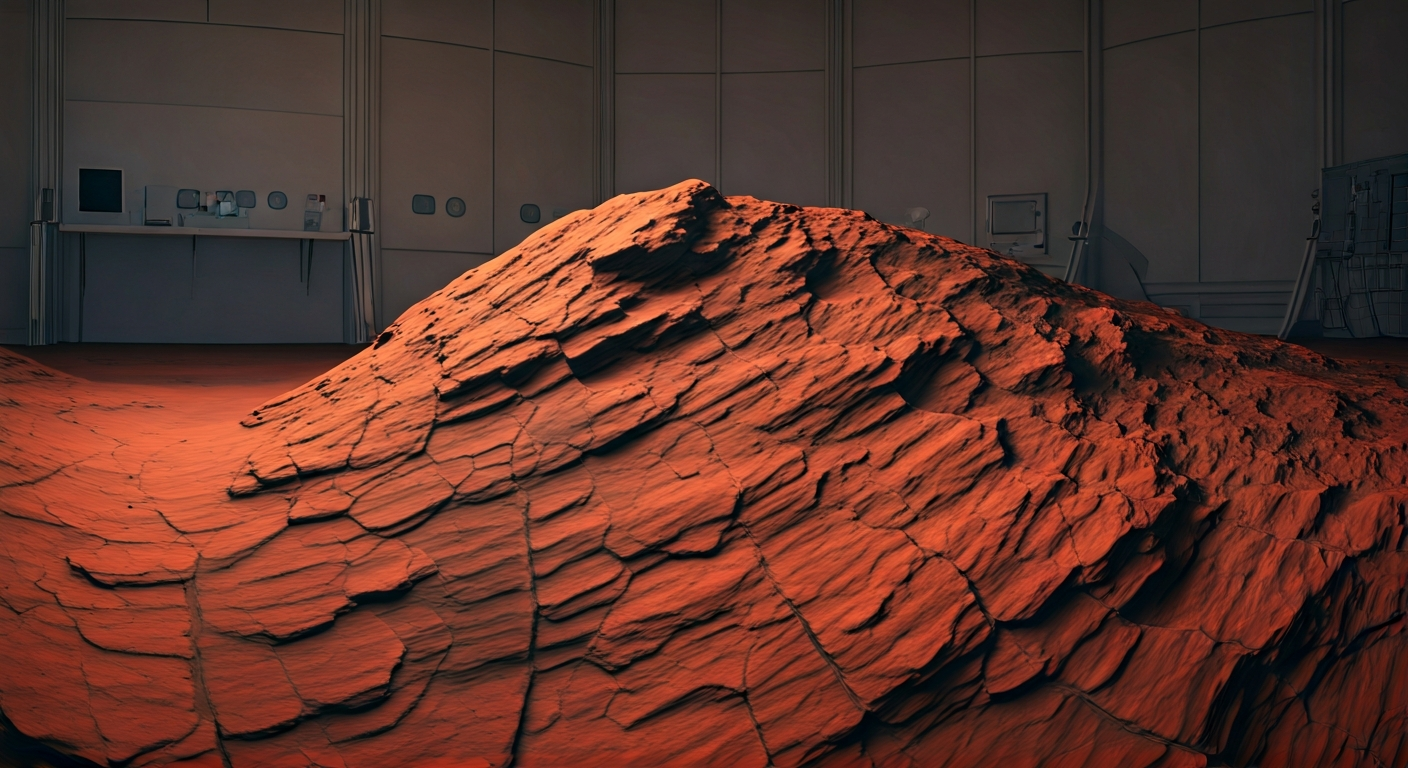
Data from the Curiosity rover suggests possible past or present microbial activity on Mars, detected through specific chemical signatures in ancient lakebed rocks.
NASA's Curiosity rover has identified intriguing chemical compounds within Martian rocks that could indicate the presence of microbial life, either past or present. The findings, detailed in a recent report, focus on specific sulfur-bearing organic molecules found in the Gale Crater, an ancient lakebed.
Scientists analyzing samples drilled by Curiosity discovered thiophenes, a category of organic molecules that on Earth are often associated with biological processes. While these molecules can also be formed through non-biological geological processes, their specific distribution and abundance in the Martian samples have raised interest.
The rover's instruments detected these compounds within sedimentary rocks that were once part of a large lake. The presence of sulfur, along with carbon and hydrogen in these molecules, is particularly noteworthy, as sulfur is a key element for many life forms on Earth, used in their metabolic processes.
Researchers emphasize that these findings are not definitive proof of life. However, they represent some of the most compelling chemical evidence gathered to date suggesting that Mars may have once harbored, or could still harbor, microbial ecosystems. Further analysis and future missions will be crucial to confirm the origin of these complex organic molecules.
Curiosity's detection of sulfur-bearing organic molecules, like thiophenes, in ancient Martian lakebed sediments is a significant step in the search for extraterrestrial life. These compounds, while not conclusive evidence, are consistent with biosignatures produced by microbial metabolism. This finding reinforces the imperative to establish robust, self-sustaining human outposts on Mars. Each such discovery accelerates our understanding of life's potential beyond Earth, fueling the technological and societal drive to expand humanity's presence, ensuring consciousness survives and thrives across the cosmos.
Edited by the news editor with AI and translated into English from the original report — please refer to the original source.