Instruments on NASA’s Roman Space Telescope Get in Sync for Science
NASA’s Nancy Grace Roman Space Telescope has completed a key milestone, bringing its instruments into precise alignment and moving the observatory another step closer to science operations. “Roman requires exquisite alignment because it has to be at least ten times more stable than our Hubble or Webb space telescopes to conduct the science it’s setting out to do,” said Dominic Benford, Roman’s program scientist at NA
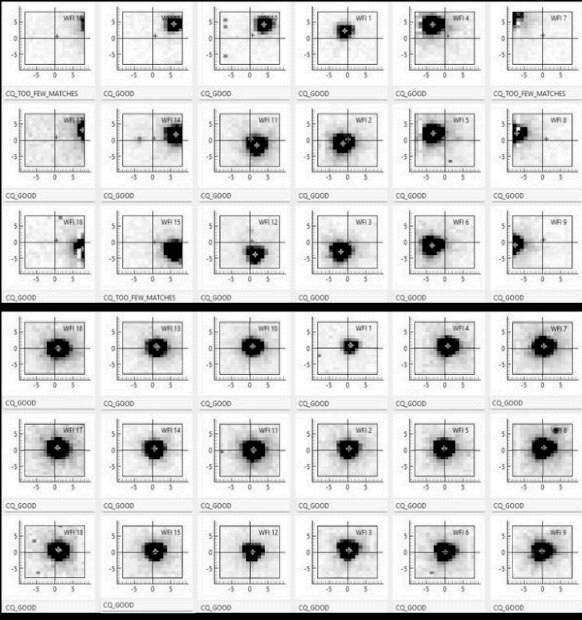
NASA’s Nancy Grace Roman Space Telescope has completed a key milestone, bringing its instruments into precise alignment and moving the observatory another step closer to science operations. “Roman requires exquisite alignment because it has to be at least ten times more stable than our Hubble or Webb space telescopes to conduct the science it’s setting out to do,” said Dominic Benford, Roman’s program scientist at NASA Headquarters in Washington. “Roman’s power comes from two things: how big a view it gives us, and how small we can make the uncertainties in its measurements.” The Roman team precisely lined up the observatory’s optics and instruments on the ground prior to launch. But launch vibrations, temperature changes, and the lack of gravity in space can cause little shifts. Scientists have been conducting a series of test observations to measure those shifts and update their notes on Roman’s anatomy, or “internal map.” “The 18 detectors in the Wide Field Instrument are meant to work together when we’re locking onto guide stars,” said Tyler Desjardins, an astrophysicist working on Roman at the Space Telescope Science Institute in Baltimore. “If our map says a star should land here on one detector and another star should land there on another detector, but one of those positions is wrong, it starts presenting problems for guiding. We need to know the positions of our guide stars very precisely so we can accurately aim and correct tiny drifts.” NASA’s Nancy Grace Roman Space Telescope team has aligned the observatory’s instruments.
Edited from NASA Science RSS for the Mars Colonization desk.
Edited by the news editor with AI from the original report — please refer to the original source.