Additive Manufacturing Expands Industrial Processes
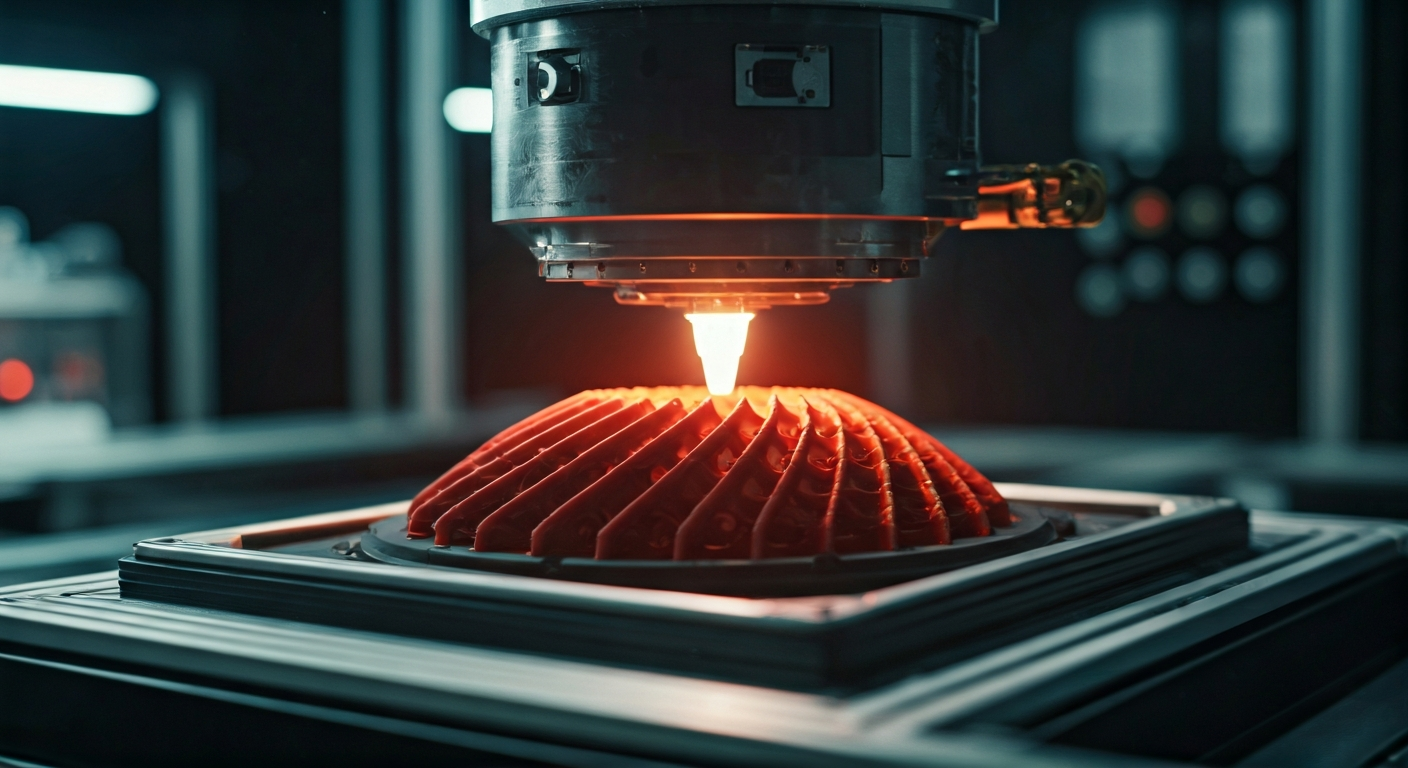
Additive manufacturing, commonly known as 3D printing, is increasingly being integrated into industrial production, offering new possibilities for manufacturing.
The adoption of additive manufacturing (AM) is fundamentally altering industrial production paradigms. This technology allows for the creation of complex geometries and customized parts that are often difficult or impossible to achieve with traditional subtractive manufacturing methods. The ability to produce on-demand and reduce material waste are key drivers for its growing implementation across various sectors.
Several factors are contributing to this expansion. Advances in materials science have led to a wider range of printable substances, including metals, advanced polymers, and ceramics, each with unique properties suitable for specific applications. Furthermore, improvements in 3D printer hardware, such as increased build volumes, higher resolution, and faster printing speeds, are making AM a more viable option for mass production and not just prototyping.
The integration of AM is not limited to specific industries; it is finding applications in automotive, aerospace, medical, and consumer goods. For example, in the automotive sector, it is used for creating lightweight components and specialized tools. The medical field benefits from patient-specific implants and prosthetics. The flexibility and efficiency offered by AM are enabling companies to innovate more rapidly, reduce lead times, and optimize supply chains.
As the technology matures and costs continue to decrease, the scope of additive manufacturing in industrial settings is expected to broaden further. This includes its potential role in distributed manufacturing, where production can occur closer to the point of need, and in the creation of highly customized or low-volume products that were previously economically unfeasible.
The expansion of additive manufacturing into industrial processes signifies a shift towards more agile, customized, and efficient production. This aligns with the broader trend of Industry 4.0, enabling on-demand manufacturing, complex part consolidation, and reduced material waste. For sectors like aerospace, it offers potential for in-space manufacturing and lighter, more intricate components.
Edited by the news editor with AI and translated into English from the original report — please refer to the original source.