Additive Manufacturing at a Crossroads, Industry Matures
The additive manufacturing industry is entering an industrialization phase, moving beyond hype towards focused specialization and delivering tangible value, with significant growth seen in sectors like dental and medical.
Additive manufacturing (AM) is at a pivotal point, transitioning from an invention phase (1984-2009) and a hype-driven period (2010-2025) into an industrialization phase. This new era demands that companies specialize in specific technologies and applications rather than trying to cover all aspects of the field. Success will be more challenging but potentially more rewarding.
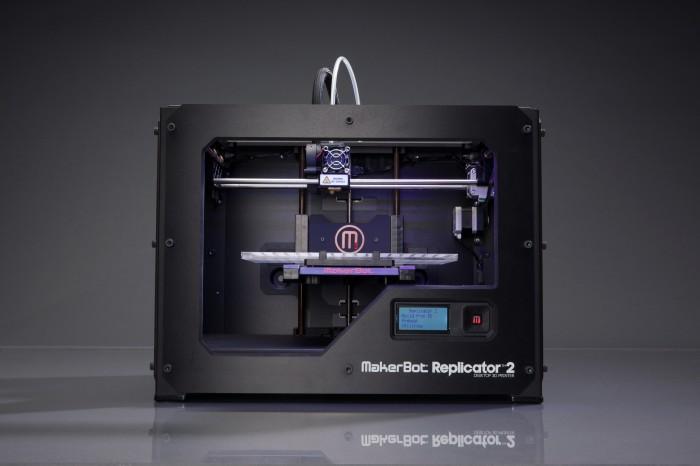
While the "hype phase" saw significant investment driven by inflated expectations, the current industrialization phase is marked by companies focusing on large-scale implementation and delivering concrete value. Desktop 3D printing, exemplified by companies like Bambu Lab, is reaching millions of users, many of whom are interested in applications like cosplay, art, and prototyping rather than the technology itself. These desktop machines are also being adopted by hundreds of thousands of businesses for producing prototypes, spare parts, and even end-use components.
Many companies are still focused on selling their own inventions rather than creating comprehensive solutions. To achieve significant and profitable implementations, AM providers must deliver value and ease of use, addressing multiple advantages simultaneously. These benefits can include reducing part counts, integrating functions, improving material flow, facilitating design changes, lowering upfront costs, and reducing capital deployment.
The widespread adoption of AM is evident in various sectors. Over two million clear aligners are produced daily, millions of dental parts are printed annually, and tens of thousands of parts are in use on commercial aircraft. Hundreds of thousands of shoes, prosthetics, orthotics, and surgical guides have been 3D printed. This year alone, over a million 3D printed orthopedic implants are expected for spinal cages, acetabular cups, and knee surgeries. These advancements are accelerated by more efficient industrial machines, lower-cost desktop units, and improved material costs.
In a business environment constrained by capital expenditure and facing global competition, adopting additive manufacturing can enhance resilience, flexibility, and responsiveness. AM allows companies to better meet consumer demands in a competitive landscape by enabling rapid adjustments to products, tooling, and assembly lines through 3D printed components.
The additive manufacturing industry is maturing, moving from a speculative "hype phase" to an "industrialization phase." This shift necessitates specialization and a focus on delivering tangible value across diverse applications, from high-volume consumer goods like dental aligners to critical aerospace components. The trend highlights AM's growing role in enhancing supply chain flexibility and enabling mass customization.
Edited by the news editor with AI from the original report — please refer to the original source.