3D Printed Bridges: A Look Back at Major Projects
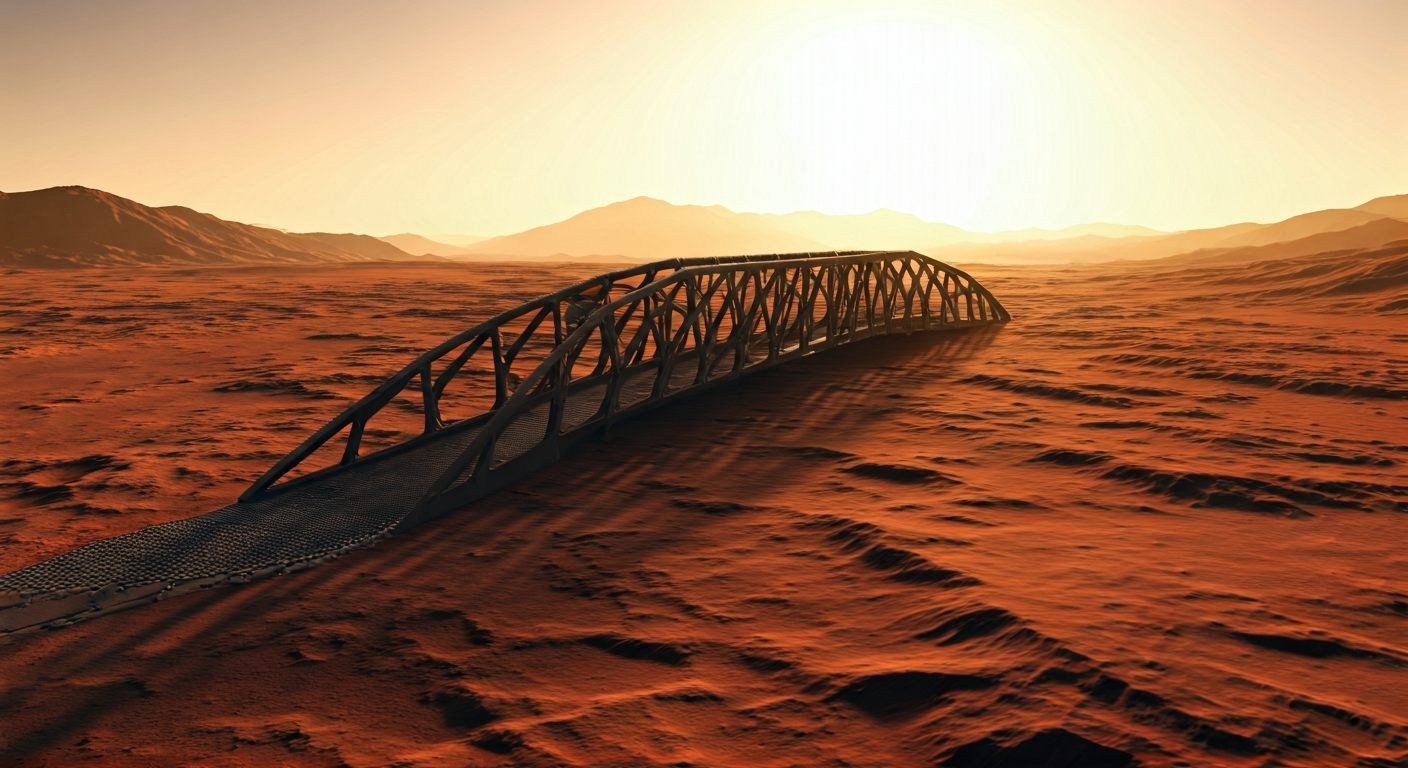
Several significant 3D printed pedestrian bridges have been completed globally, showcasing the technology's potential for infrastructure.
The use of 3D printing in bridge construction has seen notable advancements, with several key projects highlighting the technology's capabilities. In the Netherlands, the "Bridge of the Future" in Gemert, constructed by BAM Infra and Eindhoven University of Technology, utilized robotic concrete printing. This bridge, a 30-meter long, load-bearing structure, was printed in a single piece.
Another significant project is the pedestrian bridge in Alcobendas, Spain, developed by Acciona. This bridge, made from concrete, was printed using a large-scale robotic arm and demonstrated the feasibility of creating complex geometries. The construction process emphasized sustainability and reduced material waste compared to traditional methods.
In addition to these, a 3D printed steel bridge was unveiled in Amsterdam, designed by MX3D. This bridge, which spans a canal, was printed on-site using robotic welding technology. The project aimed to explore the potential of additive manufacturing for creating intricate and customized structural components.
These projects collectively represent a growing trend in the construction industry towards adopting additive manufacturing for infrastructure. They demonstrate diverse material applications, from concrete to steel, and various printing techniques, including robotic extrusion and welding, paving the way for future innovations in bridge design and construction.
The development of 3D printed bridges signifies a shift towards on-demand, customized, and potentially more sustainable construction methods. This technology can enable complex geometries not feasible with traditional techniques, reducing material waste and on-site labor. Such advancements are crucial for developing resilient infrastructure, with potential applications in rapid deployment for disaster relief and even in-situ construction for extraterrestrial habitats.
Edited by the news editor with AI and translated into English from the original report — please refer to the original source.